philosophy
how I build, and why simple beats clever
I lead people the same way I build software: find what actually matters, throw out everything that doesn't, and never mistake the rules for the work.
People first. If the team is happy they build well, and happy clients fall out the other end — it's that simple, and most places overcomplicate it into oblivion. I don't punish mistakes; I mine them. A mistake is the most expensive lesson you'll ever buy, so you'd better extract it instead of burying it. Some have told me they were terrified of me at first — I read too much, talk too fast, have no patience for platitudes — right before they worked out I'd been on their side the whole time.
I don't teach framework-of-the-week. I teach the durable stuff: thinking in flowcharts, trapping and logging errors like you'll be the one debugging them at 3am, designing something you can still understand a year later. When my team wanted React, I didn't argue — I gave them two months to go find out. They hated it, tried Vite, then rewrote the whole thing back to something simple. Best way to learn that a framework is just code somebody else wrote is to climb the mountain yourself.
On the build side: simplicity is king, dependencies are evil, and "best practice" is usually someone else's context wearing a crown. I like what works and stays stable — which almost always means less: fewer moving parts, fewer abstractions, fewer reasons to wake up at night. And when something genuinely isn't working, I don't nurse it. Tear it down, build the right thing.
work
stealth engineering, AI coding, producer
A few things, as evidence rather than a résumé:
Berkut — the terminal you came in through. A multi-agent orchestration system I built: specialized agents that coordinate, debug my own infrastructure, and talk to each other while I watch. I gave it a Soviet space-program skin because I wanted to, and because a tool you enjoy looking at is a tool you'll actually use. It's a chunk of how I get to roughly 10x.
The FinThrive turnaround — inherited a two-developer team without much direction. Took it AI-first under the radar and installed real tooling. I proved I could ship in a week what used to take six months, then built the paper trail that made it look approved. The team now writes ~95% of its code with AI and leads the company in adoption. We built a CRM, SCORM Object Store, and an automated webinar builder from scratch — because the off-the-shelf options were going to make our customers miserable.
Generator — a CMS/RAD Platform I wrote for a healthcare media client about to overpay for something pre-built. It ran over a decade. When a larger company acquired them, the incoming CTO called it some of the most stable code he'd seen.
House of Robot — not software. The production studio I built, and the source of everything I make that isn't code. Out of it came Analog Trenton — forty tracks of a city's music scene cut to 1-inch tape and pressed to vinyl — and Live from the House of Robot, an award-winning web series. I run creative productions the way I run engineering: assemble the right people, set the constraint, get out of the way. That skill transfers further than anyone expects.
whoami
engineer, leader, techno producer, and not what you expected
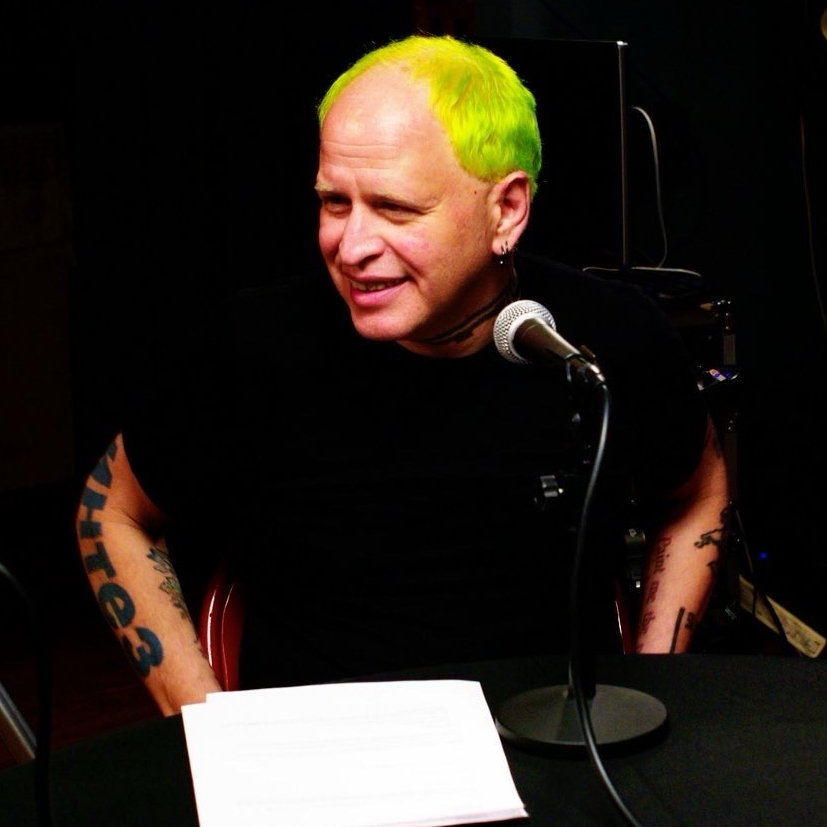
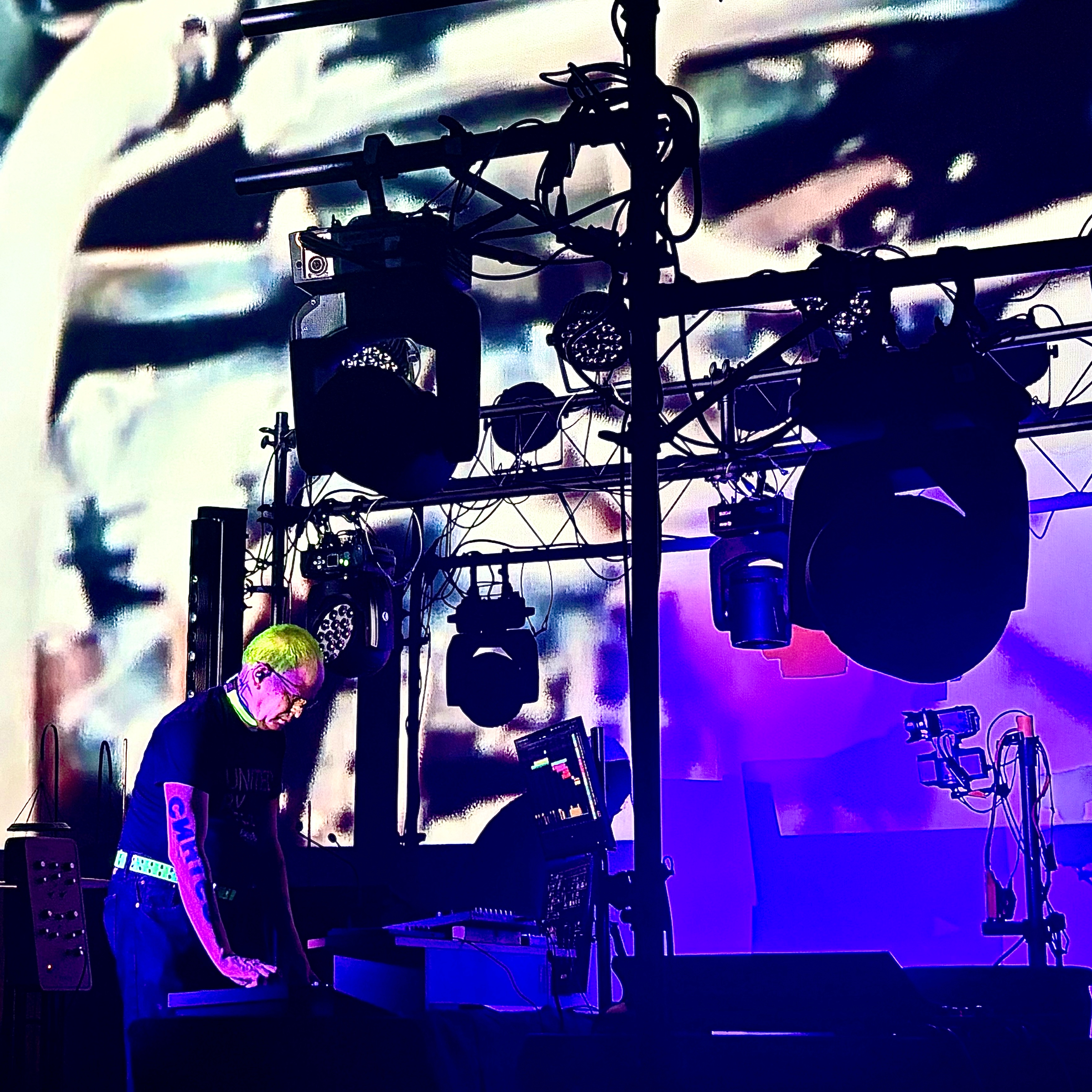
I have over 30 years of egineering experience. My hair is usually a color that doesn't occur in nature, I've got a Lorentz transformation tattooed on one arm proving time is relative. I ship code all day and light raves and produce techno on weekends. That means I can talk to a 24-year-old engineer and a 60-year-old hospital exec in the same afternoon and lose neither.
I came up through theater before software paid better — stage manager, technical director, did drag in '90s downtown New York under a name I'll tell you in person. I run a studio called House of Robot: a recording studio and multimedia creative space that works with local artists and nonprofits to develop ideas into finished projects. Tech is how I make a living. Live performance is where my heart actually lives — and I've stopped pretending those are different skills. Running a show and running a release are the same job in different clothes.
I've practiced Buddhism and Eastern philosophy a long time, and it's quietly made me a better manager than any leadership book — mostly by teaching me to hold strong opinions without needing to be right, and to stay unflappable when everything's on fire.
No degree. I left Stevens Institute of Technology shortly before graduation to take a startup job, and I've spent decades proving track record beats credentials. If that makes you nervous, we're probably not a fit — and that's fine. That's the filter doing its job.
contact
establish comms
The site's done its job if you're reading this. The rest happens in conversation — context doesn't compress into a webpage, and I'd rather just talk.
I'm open to founding or lead engineering, fractional engagements, and the occasional thing nobody else will touch. Remote only. I build, I lead small teams, and I'm at my best where there's a hard problem and not much permission.
If you got this far, you're probably one of mine. Say hello.
bill@houseofrobot.com
linkedin.com/in/billnobes
view résumé [docx] [pdf]